FCK / THE ANORAK
From Fan Culture to Form
From Fan Culture to Form
How can a sense of belonging take shape in a garment?
Drawing on FCK, Copenhagen and the loose silhouettes of the 1990s, I developed an anorak exploring the relationship between community, movement and identity. Drawcords gather its generous volume, while a muted colour allows the construction and subtle club references to emerge.
The tactile process book traces the development through collage, silhouette studies, material samples and construction details. Images become lines, lines become pattern pieces, and pattern pieces become a garment developed through digital simulation and physical testing.
The project formed part of a collective collection concept for the 2023 competition between FCK and Sustainable Fashion Tech at KEA, now EK. Presented here is my work on the anorak and its development.

01 / A Visual Landscape
The club’s blue, the red intensity of the stands, urban greenery and muted earth tones establish the visual starting point. Through these moodboards, I explore how colour, surface and atmosphere can translate fan culture into a language of clothing.

02 / From Observation to Silhouette
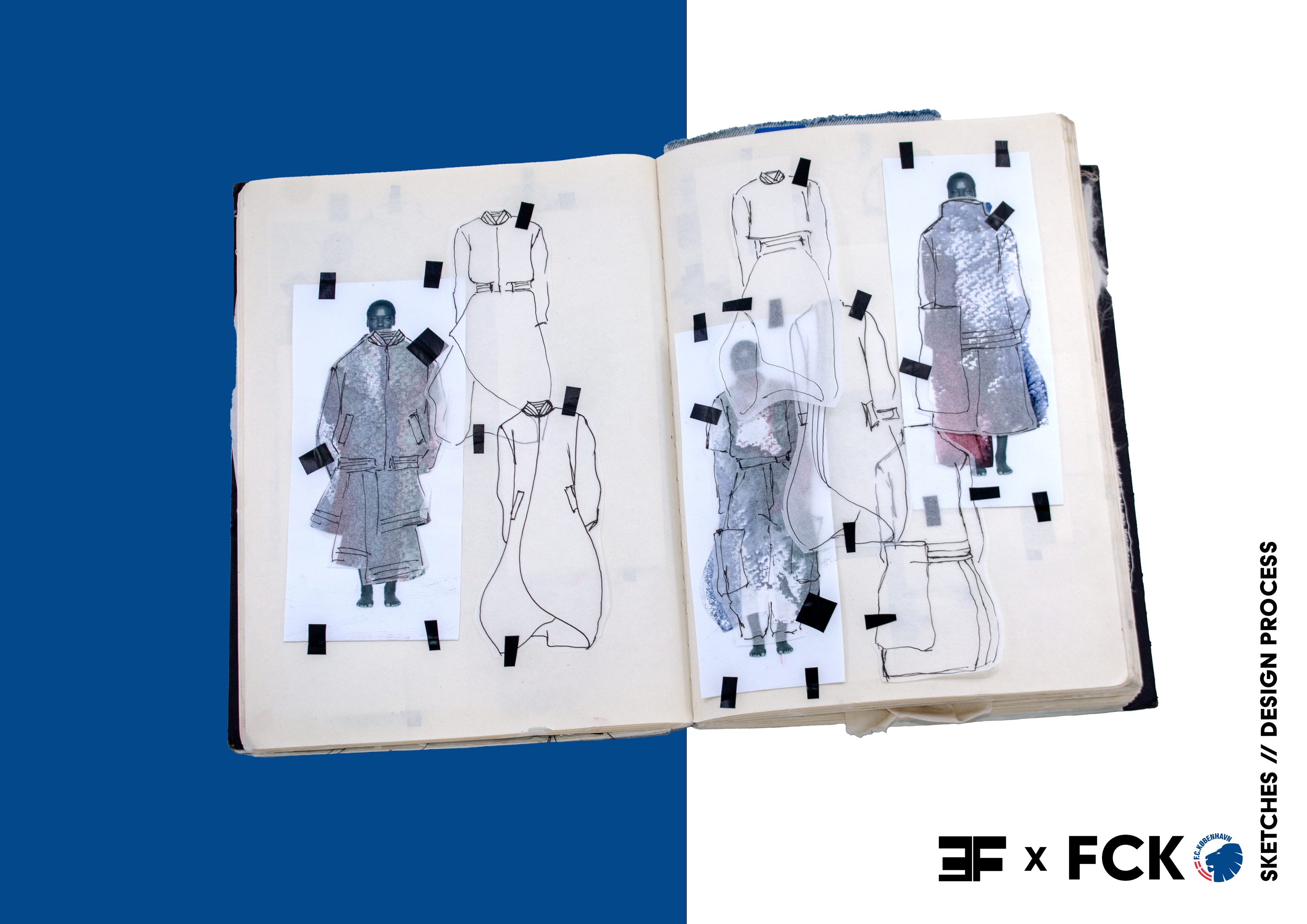
Photographs of existing outfits are reworked through ink drawings and transparent layers. Drawing over the images allows me to isolate proportions and shift the relationship between body and garment. Collage becomes a tool for discovering new forms.

03 / Volume in Motion
Loose silhouettes evolve through variations in length, width and layering. I explore where clothing falls away from the body and where it gathers again - a tension between space and definition that carries through into the anorak.
04 / An Open Wardrobe
Tops, shorts and close-fitting base layers are explored in different combinations. These studies reflect the collection’s gender-neutral ambition, considering how proportion and styling can accommodate different expressions.

05 / Colour Meets Surface
The moodboards meet physical fabric samples and garment sketches. I investigate how a colour changes with the surface of a material and how quilted sections and soft volumes might contribute to the collection’s visual language.

06 / Material Informs Form
Fabric samples introduce weight, texture and drape into the design process. Placed alongside the silhouettes, they help me assess which combinations can support the intended expression. The palette develops around subdued shades with occasional stronger accents.
07 / Form Becomes Construction
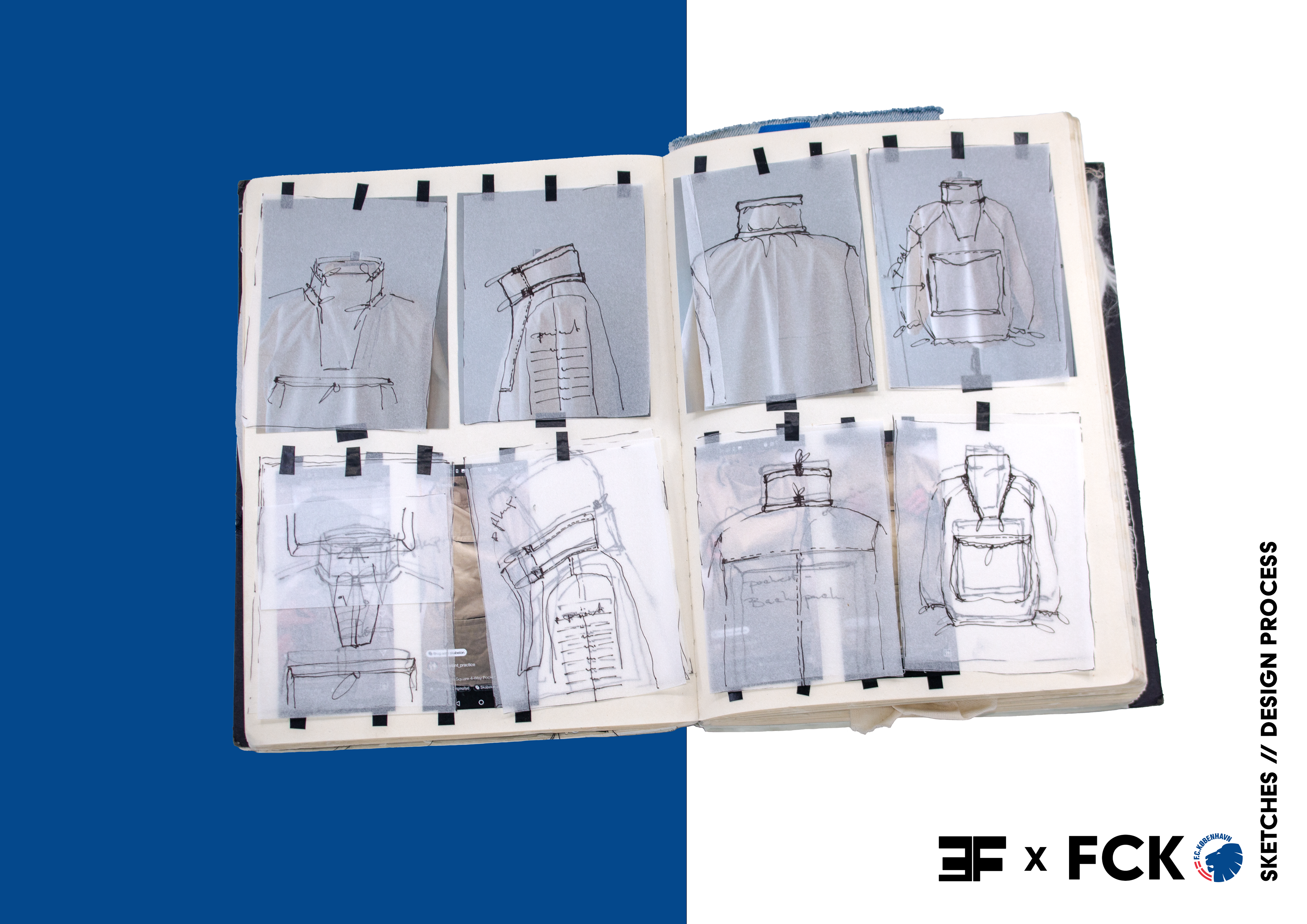
The anorak develops through studies of its front, back and individual details. Hood, raglan sleeves, front pocket and drawcord channels are considered parts of one construction. These adjustments give the volume direction and make adjustability a visible part of the design.

08 / Defining the Details
Technical drawings describe the anorak’s construction and specify placements, closures and finishes. The hand-drawn investigations become documentation that supports the next stages of product development.

09 / Digital Exploration
In CLO3D, I explore proportions, volume and the placement of details on the body. The digital model allows me to assess the garment as a whole throughout development. A sequence of years along the sleeve introduces a graphic trace of the club’s history.

10 / A Change of Form
The physical anorak brings the process together in a generous silhouette with adjustable openings and a prominent front pocket. Its transformation into a bag introduces another function, exploring how the garment can change form as the situation demands.


